

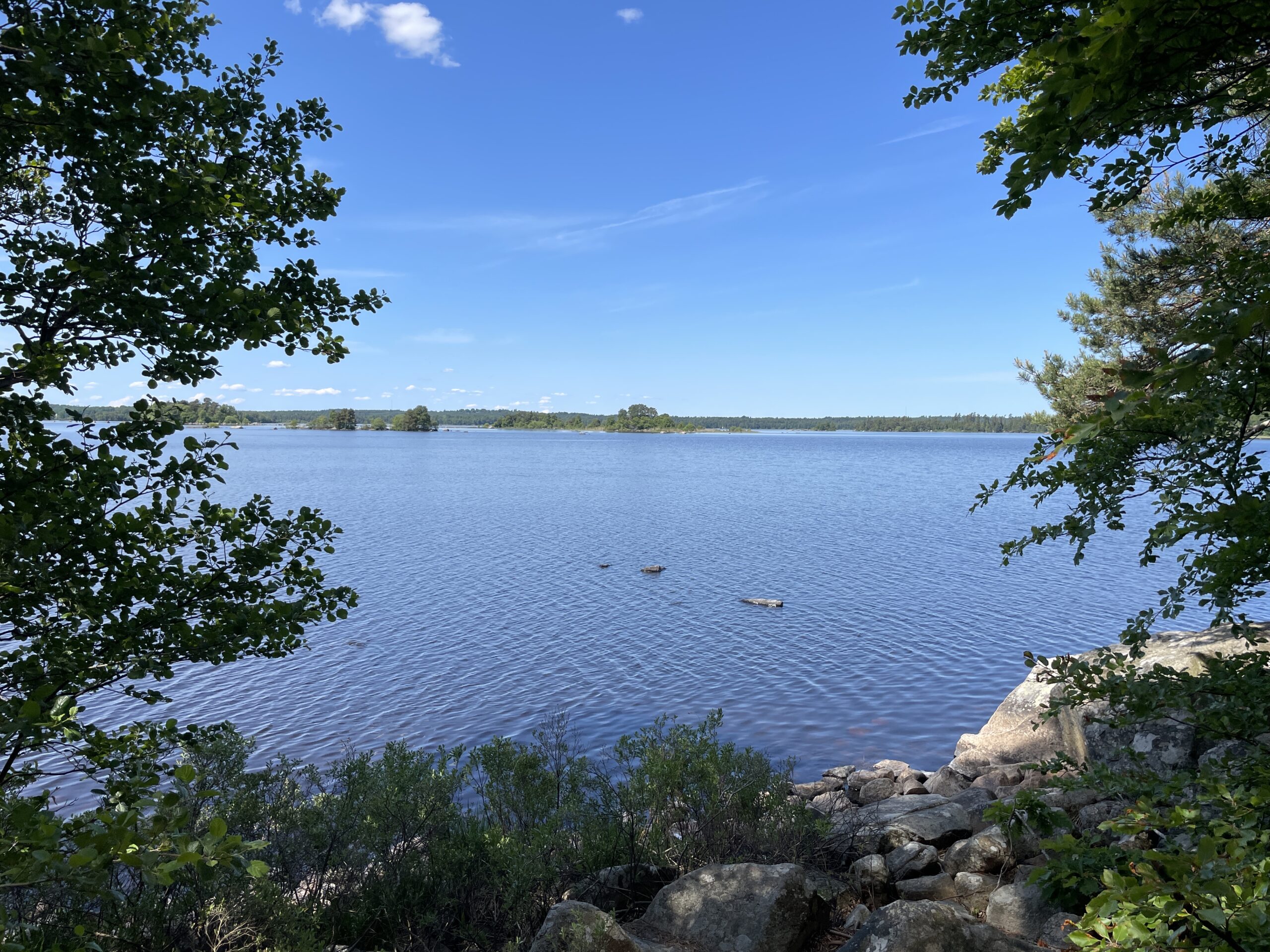
Åsnens National Park covers 1,873 hectares and is located in the municipalities of Alvesta and Tingsryd, not far from Växjö. Water dominates here – three quarters of the area consists of lakes, islands, and skerries. The landscape is flat and easy to walk on, but at the same time wild: old beech forests, marsh lakes, stone and boulder fields, forest-covered islands, and beaches where the forest often extends right down to the water.
Beneath your feet, you will find traces of the inland ice sheet. When the ice retreated around 11,000 years ago, beach marks were formed where gravel and sand were washed away and boulders remained. The Husebyåsen esker runs through the area, both above and below the water surface, giving the landscape its special character. The national park was inaugurated in 2018 as Sweden's 30th, with the aim of preserving a largely untouched forest and lake landscape in southern Sweden.
At Bjurkärr, near Entré Sunnabron, you will encounter very old forest with an almost primeval feel. Rare lichens, fungi, and wood-dwelling insects thrive here, and many endangered species call the old trees and dead wood home. Åsnen is also known for its bird life. The combination of forest, wetlands, and water makes the area rich in species such as ospreys, white-tailed eagles, black-throated divers, great crested grebes, and goosanders. The lake serves as both a breeding ground and an important resting place for birds.
When you stay at Smålandstorpets Lanthotell, you have the opportunity to combine two powerful Småland experiences: the wilderness feeling in Åsnen National Park and the history that lives on at Huseby Bruk.
After visiting the forests and archipelago of Åsnen National Park, a visit to Huseby Bruk is the perfect next step! Here you can also enjoy a meal at Elisabeth's restaurant and café. Huseby is located on the Helige River between Lakes Salen and Åsnen, and ironworks have been operating here since the 17th century. Over the centuries, blast furnaces, foundries, hammer mills, and agriculture have shaped the area. At the end of the 19th century, the estate was run by Joseph Stephens, the last private owner. Florence Stephens bequeathed Huseby to the state.
Coming here is described as a journey through time, a visit to living history. The river rushes through the mill, the kitchen garden flourishes, and the entire area—the castle, park, garden, and mill environment—is a listed building. Guided tours, exhibitions, and educational activities are offered here, and the season ends with a large Christmas fair where the wings of history can be felt in every house.