

Discover Habo Church - A unique cultural heritage near Smålandstorpet
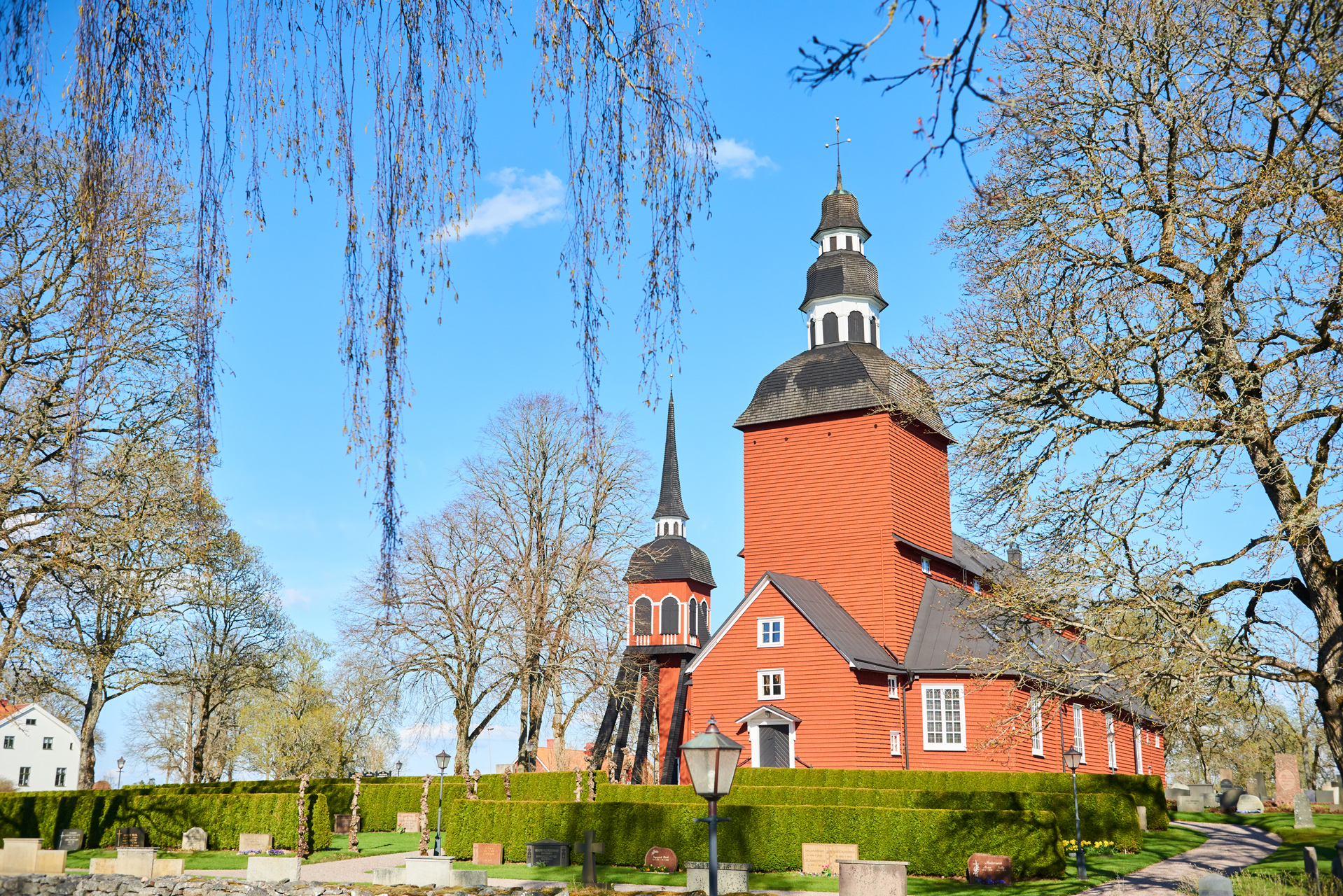
In the quiet landscape of Småland, just a short drive from Smålandstorpet, stands one of Sweden's most unique church buildings - Habo Church. This magnificent wooden building is something completely different from a traditional rural church. With its cathedral-like size, unique baroque interior and lavishly painted walls and ceilings, Habo Church offers a rare insight into 18th century religious life and artistic expression. For those who want to combine nature-based relaxation at Smålandstorpet with genuine cultural experiences, a visit to Habo church is an obvious choice.
Read more about Habo Church here.
A wooden church with a cathedral feel
Habo Church is located less than five kilometers southwest of the village of Habo, where the country roads wind through the rolling Småland landscape. The current church building got its impressive appearance during a rebuilding in 1723, led by the dean Martin Seth and the enterprising parishioner Swen Nilsson Swan. The result was an unusually large wooden church, with galleries all around the church and a roof that rises majestically in the middle - an architectural feature that still amazes visitors today.
What makes Habo church so special is not just its size, but above all the well-preserved paintings that cover the walls and ceiling. Not only do they illustrate Christian stories, but they act as a kind of visual catechism - teaching the Christian faith through imagery. This unique approach is said to have been suggested by the vicar at the time and was intended as a way to help the congregation absorb the message of the Bible.
Colorful teaching in pictures - unique church paintings
In the 1740s, the painters Johan Christian Pettersson and Johan Kinnerus, both from Jönköping, were commissioned to decorate the interior of the church. With the help of their apprentices, they created a comprehensive painting that today is considered unique in its kind. Imagine entering a church where the entire interior - from floor to ceiling - tells a story. You'll see the Ten Commandments painted along the side walls, the Creed on the ceiling below the pews, and the Lord's Prayer on the walls above the pews.
The whole church is like a baroque painting school - sometimes called 'peasant baroque' - where each picture aims to instruct, remind and move. The motifs include large scenes depicting baptism, communion and the blessing. These images are not only beautiful, but also reflect the daily lives, beliefs and hopes of people in a time long before printed books and public education.
Altarpiece, pulpit and font - artistic splendor in wood and stone
At the center of the church is the altarpiece from 1723, a masterpiece by sculptor Jonas Ullberg. It depicts the crucifixion, burial and resurrection of Jesus. The resurrected Christ is enthroned at the top, holding the banner of victory. On either side are Moses with the stone tablets and Aaron with the green staff - a symbolism that evokes God's covenant with man.
But what catches the attention of many visitors is the small clock in the altarpiece. Installed in 1750, it has a clockwork mechanism that still ticks quietly. Every hour on the hour, an angelic boy strikes two balls with his hammer - a charming and unexpected feature in a sacred setting.
The pulpit, also carved by Ullberg, is equally magnificent. Around its basket are figures representing Jesus and the twelve apostles. Interestingly enough, the provost Seth suggested that the church buy a used pulpit from Skara Cathedral, but the congregation chose to invest in a new one instead - a choice we can still be grateful for today.
The sandstone font is the oldest object in the church, probably dating from the 13th century. It has its own exciting history. During a restoration in 1908, it was replaced by a new font and the old one was forgotten. It ended up in a shed, where it was even used to mix red paint. But in 1951 it was put back into use, and the inside still shows traces of its later use.
The musical heart of the church - the organ
The organ in Habo church today is a modern instrument in baroque style with 16 voices, built in 1962. But the organ façade dates back to 1736 and was created by Habo artist Magnus Ullberg-Johansson. The original organ was built by the famous organ builder Johan Niclas Cahman, whose work also lives on in today's organ - the pipes from his Principal 4' are still used.
The harmonious combination of history and musical renewal gives the church a vibrant sound, where every note carries centuries of devotion and human presence.
Bell tower and steeple - dual symbols
Something that puzzles many visitors is that Habo church has both a belfry and a steeple - but only the former contains bells. The tower, added during the rebuilding in 1723, is an ornament, while the belfry from 1760 contains three bells. These were cast by the bell caster Elias Fries in Jönköping, also a member of parliament, and still carry notes from another century. One of the bells, the middle bell, had to be recast in 1877.
Lodges and stands - the church reflects the structure of society
The interior of Habo church clearly reflects the old society. There were lodges for the finer people, benches for peasants and pews for crofters, maids and farmhands. This was a time when where you sat in church said a lot about your social status. Today, these historical details are a reminder of how deeply rooted the church was in the local community.
Visit Habo church - practical information and guided tours
During the summer, daily guided tours are offered between June 25 and August 4. There is no need to register, and the tour always begins with a short devotional. Each tour lasts approximately 20-30 minutes and is held at the following times:
- 11.00
- 12.00
- 15.00
- 16.00
Tours are canceled for funerals, baptisms or weddings, so you may want to double-check the calendar before you go.
If you prefer to discover the church on your own, an audio guide is available. With your mobile phone and headphones, you can scan a QR code outside the church and choose between two guided tours - one on the history of the church and one on the paintings.
How to get to Habo church
From Smålandstorpet it takes only about 40 minutes by car to Habo church. Drive towards Habo community and then follow the road signs to the church, which is located about five kilometers southwest of the town. The church is beautifully situated with the old vicarage and parish house as neighbors - a small cultural center in miniature.
A tranquil experience in a historic setting
A visit to Habo church is much more than a quick tour of an attraction. It's a chance to slow down, step into another time and feel the presence of history in every detail. The well-preserved paintings, the smell of wood, the gentle ticking of the altar bell - all combine to create a quiet and heartfelt experience.
Book your accommodation at Smålandstorpet - close to history and nature
When you stay at Smålandstorpet, you get the best of both worlds: tranquillity and nature on your doorstep, and exciting excursion destinations within easy reach. Habo church is one of many gems that you can easily reach during your stay with us.
Welcome to read more about our accommodation options or book directly via our website. We look forward to welcoming you to Smålandstorpet - your place for rest, discovery and genuine Småland hospitality.